The regulation numbers
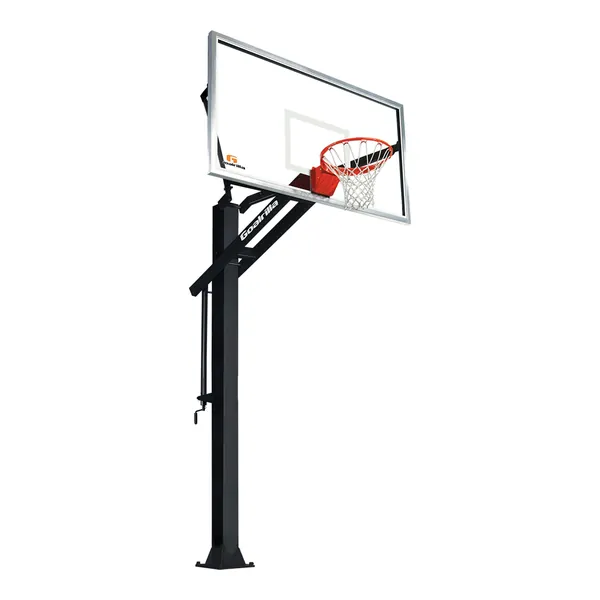
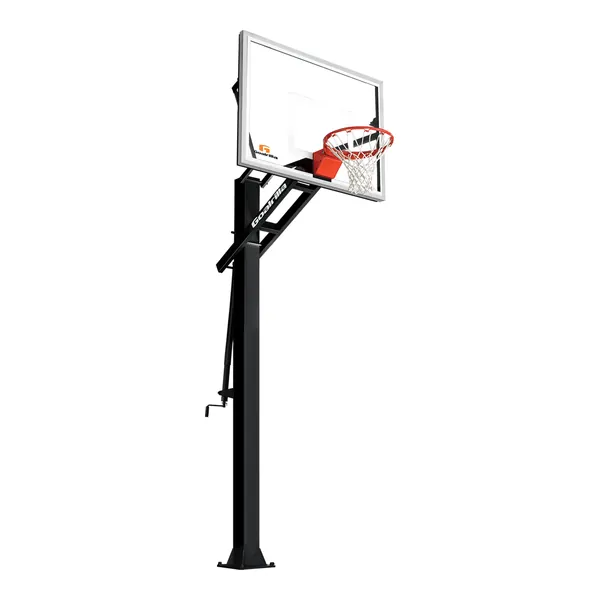
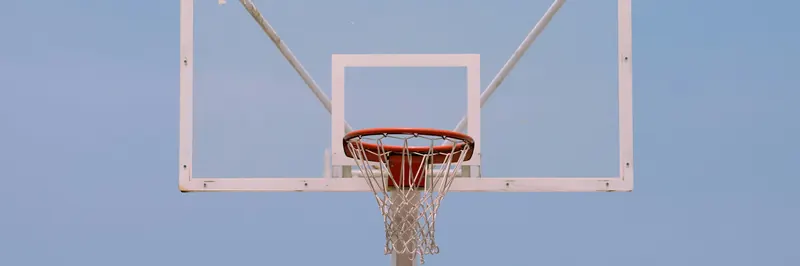
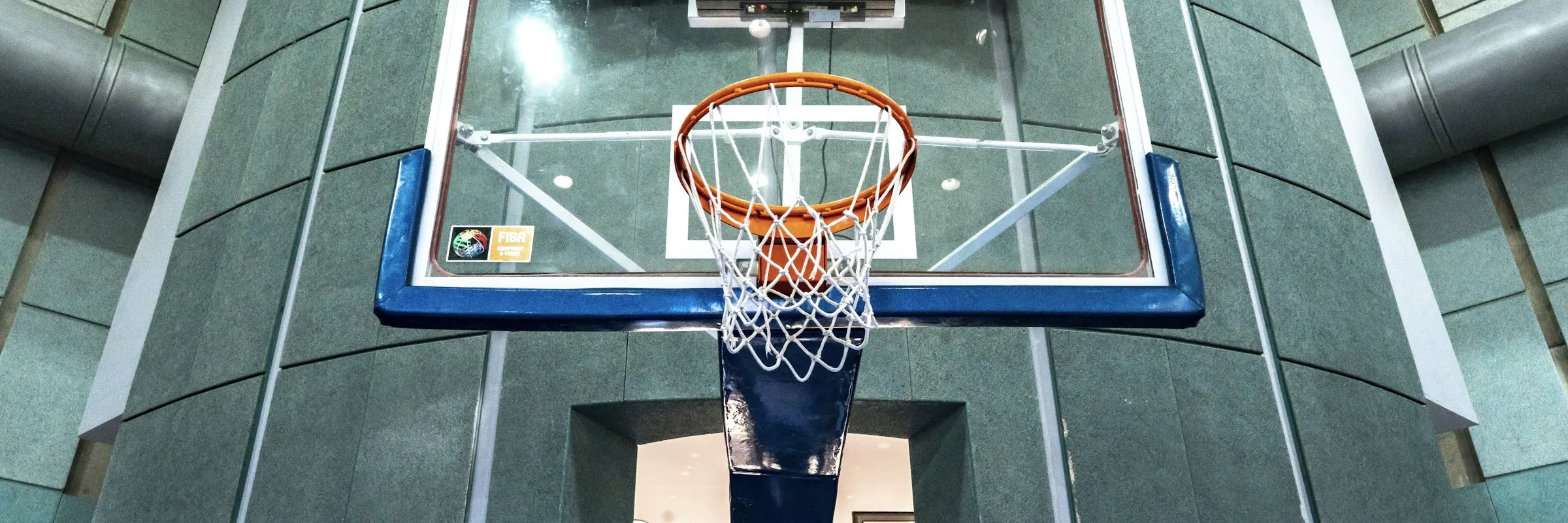
Two numbers are fixed by the game. The rim is 10 ft above the floor to its top edge, for high school, college and the pros, per Goalrilla's FAQ. The full regulation backboard is 72 inches wide and 42 inches tall; Goalsetter calls it the size used in high school, college and NBA competition, "the closest to an arena feel".
A full NBA or college court is 94 by 50 ft, Goalrilla notes, which tells you why nobody fits one in a driveway. At home you are building a half court, or more often a key and a three-point arc that clips the lawn.
Backboard sizes and who they suit
Goalsetter's buying guide maps board widths to players, and it matches what the other makers say:
- 72 x 42 inches: former, current or serious players who want the regulation size.
- 60 x 38 inches: Goalsetter's best-selling size, "built for serious play, but sized well for young families".
- 54 x 36 inches: families with young players still learning the game.
- 48 x 32 inches: the most economical, for recreational play with young children.
Board heights vary by brand: a Goalrilla GS60C is 60 by 36, a Silverback SB60 60 by 33, a Goalrilla GS72C 72 by 40. Width is what you feel on bank shots; height matters mostly for looks and for the shooter's square.
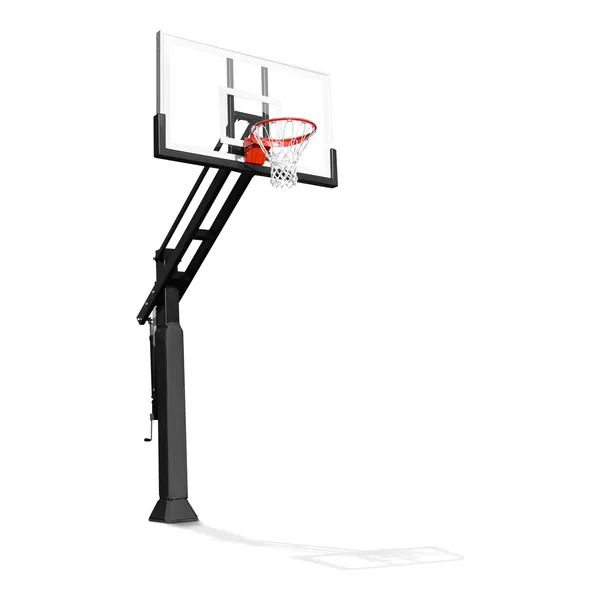
Pro Dunk THOR Gold
The 60-inch board fits most two-car driveways, the 6 by 6 inch pole holds it still, and the rim goes from 5 to 10 ft as the kids grow.
9.4/10Excellent · $2,399 at Pro Dunk, checked Nov 12, 2026
Match the board to the driveway
Goalsetter's table is the simplest rule we have seen:
- Small, one-car driveway: 54 or 48 inch board, 5 by 5 or 4 by 4 inch pole.
- Medium, two-car driveway: 60 or 54 inch board, 5 by 5 inch pole.
- Large, three-car driveway or court: 72 or 60 inch board, 6 by 6 or 5 by 5 inch pole.
Goalrilla says the same thing: consider a smaller board for a smaller driveway "to allow for ample playing space". A 72-inch board over a narrow driveway looks impressive for a week and then makes every game feel cramped. Our rankings by size: 54-inch, 60-inch, 72-inch.
Pole size: the part that stops the shake
A bigger board needs a stiffer pole. Among the hoops we compare, poles run from a 3.5 inch round tube (Silverback NXT 60) to an 8 by 6 inch one-piece post in 5-gauge steel (Pro Dunk THOR Platinum). Gauge is the wall thickness: the lower the number, the thicker the steel. Goalsetter publishes 7-gauge (3/16 inch) walls; Pro Dunk 5-gauge. Goalrilla publishes pole sizes but not the gauge.
Rule of thumb from the makers' own pairings: 4 by 4 inches for 54-inch boards and casual play, 5 to 5.5 inches for 60-inch glass, 6 inches and up for 72 inches.
Overhang: room to play under the rim
Overhang is the distance from the front of the pole to the front of the backboard. Goalrilla's overhang guide recommends about 2 to 4 ft and explains the trade-off: too little and players run into the pole; 5 ft or more and the weight of the board far from the pole adds shake. Add the roughly 25 inches the rim sticks out from the board, and a 5 ft overhang reaches more than 7 ft into the court.
Our hoops range from 2 ft (Goaliath Ignite and Prodigy) to 4 ft (THOR Gold and Platinum, Goalsetter MVP, Goalrilla FT72).
Laying out the court on a driveway
Once the board size is settled, place the hoop so the play area is in front of it. Pro Dunk's rule of thumb is to set the post about a foot off the driveway, and to allow at least two feet of board over the playing area for play under the basket. On a regulation court, the baseline is supposed to be four feet behind the backboard, Pro Dunk adds, which is one reason a 4 ft overhang feels natural to experienced players.
Measure the free-throw distance from the face of the board, not from the pole. If the lawn begins where the arc would be, that is normal: almost every home court is a compromise.
Our picks by size
- 54 inches: Goalrilla GS54C for the lifetime warranty, Goaliath Prodigy on a budget.
- 60 inches: Pro Dunk THOR Gold, then Goalsetter All-American and Goalrilla GS60C.
- 72 inches: THOR Platinum, Goalsetter MVP, and the value pick Goalrilla GS72C.
Each pick links to a review with the full specs, the dated price and the catch.
Board material and thickness, by size
Size and material go together. At 72 inches, every hoop we compare uses tempered glass, from 3/8 inch (Goalrilla, Goalsetter) to 1/2 inch (Pro Dunk THOR Platinum); Lifetime does not state the thickness of the Mammoth 72's glass. At 60 inches you find glass from 5/16 to 1/2 inch, plus one polycarbonate board (Silverback NXT 60). At 54 inches, glass on the Goalrilla GS54C and Goaliath Prodigy, acrylic on the Spalding U-Turn.
Goalsetter recommends tempered glass for homes and acrylic for institutional courts. If you are torn between a bigger plastic board and a smaller glass one, the makers' own advice points to glass: rebound consistency is what players feel every day. Our tempered glass ranking lists all twelve glass models.
Three sizing mistakes we see all the time
Buying the size in the photo. Product photos show a 72-inch board on a wide, empty court. Your driveway has a car, a garage door and a flower bed. Picture the board six feet wide over your own slab before you order.
Upsizing the board, not the pole. A bigger board is heavier and catches more wind. Makers pair them with bigger poles for that reason: in our data the 72-inch hoops all use 6 x 6 inch poles or larger (8 x 6 inches on the THOR Platinum), while the 54-inch boards sit on 4 x 4 or 5 x 5 inch poles. If a 72-inch board comes on a small pole, ask why.
Forgetting the youngest player. Board size does not help a seven-year-old if the rim stops at 7.5 ft. Check the lowest height in the comparison tool before you settle on size; it is the row people skip and regret.
Adjustable height: how low is low enough?
Every hoop we compare adjusts up to 10 ft. The difference is at the bottom. Goalrilla, Goaliath, Silverback, Lifetime and Spalding stop at 7.5 ft; Goalsetter goes to 6 ft; the Pro Dunk THOR Gold to 5 ft. Goalsetter makes the case for low rims well: at lower heights, younger children "can experience the joy and happiness of making a basket" while learning to shoot properly. If your youngest is under eight, the bottom of the range matters more than the top. See our adjustable ranking.
Our three picks for this guide
Scores come from our published formula; the full list is in the ranking.