Stability: concrete beats a water base
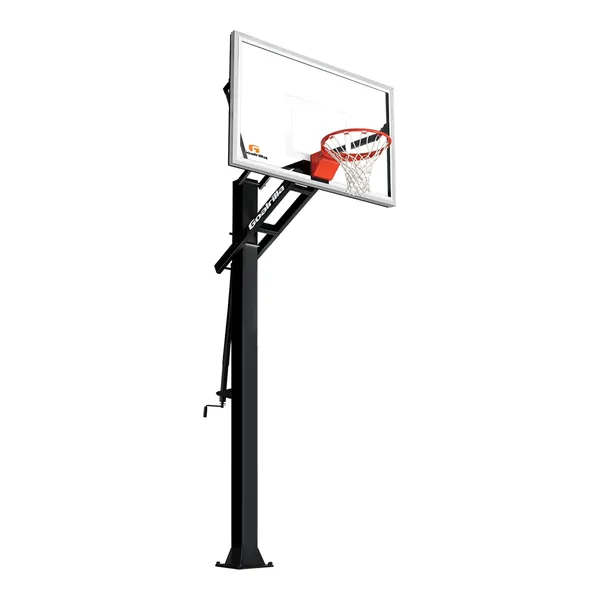
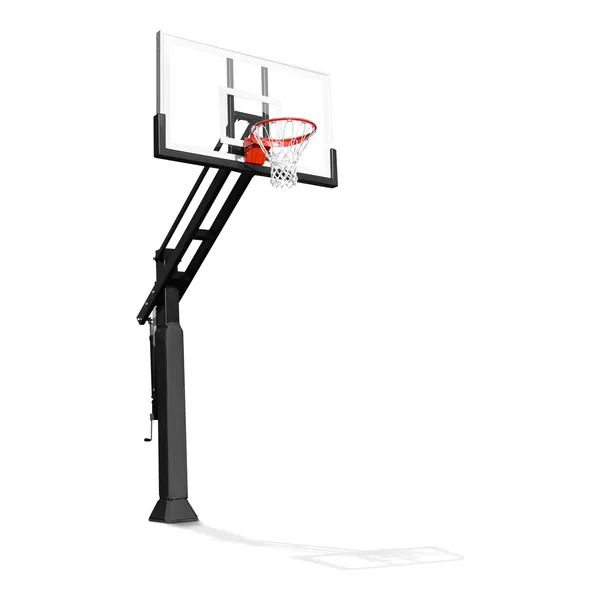
This is the big one. A portable hoop stands on a base you fill with water or sand; an in-ground hoop bolts to a footing of 12 to 25 bags of concrete, depending on the model. Goalrilla's in-ground collection page sums up the result: the concrete installation makes the hoop much more stable and eliminates the risk of tipping over, "especially during a dunk".
Stability is also what makes a hoop feel good. A board that shakes after every shot sends rebounds in random directions, and kids notice long before parents do.
The backboard: glass is mostly an in-ground thing
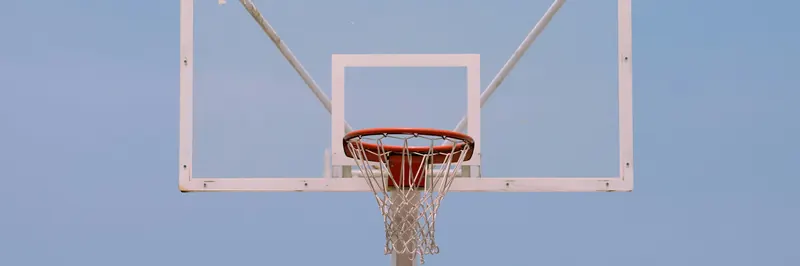
Most in-ground hoops use tempered glass, which Goalsetter's buying guide calls the standard residential choice, with the truest ball rebound. Twelve of the fourteen in-ground hoops we compare have tempered glass boards, from the 54-inch Goaliath Prodigy ($799.95) to the 72-inch THOR Platinum. The two that do not are the Silverback NXT 60 (polycarbonate) and the Spalding U-Turn (acrylic in its $899.99 version).
Glass is heavy, and a heavy board on a portable base needs an even heavier base to stay put. That is why the glass-and-steel combination is where in-ground hoops shine.
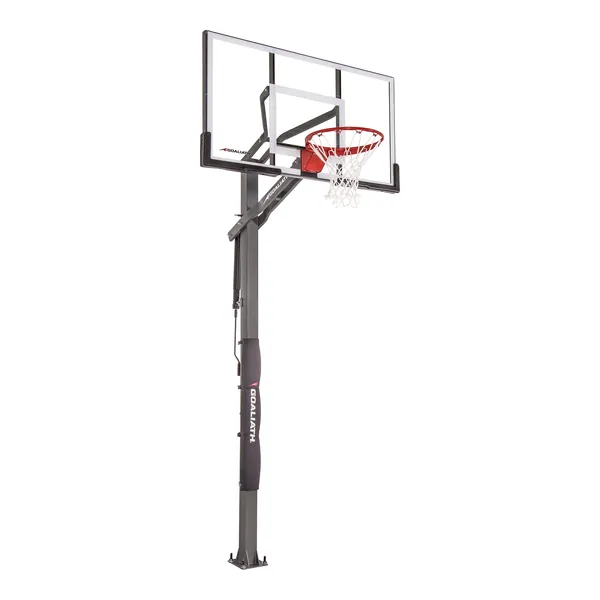
Goaliath Ignite 60
The in-ground step up from a portable at portable-ish money: 60-inch tempered glass, pads included and an anchor you can unbolt if you move, $999.95.
8.4/10Good · $999.95 at goalrilla.com, checked Nov 12, 2026
Space on the driveway
A portable hoop's base sits on the court, right under the rim, and you walk around it every day. Goalrilla notes that in-ground hoops take up less space than a portable's molded base. With an overhang of 2 to 4 ft, the pole of an in-ground hoop can sit off the concrete altogether; Pro Dunk suggests about a foot off the driveway for most installs.
Price and installation
Portables win here. The in-ground hoops we compare cost $769.95 to $2,999.99 on November 12, 2026, and you need concrete plus a weekend of digging, or about $500 to $700 for an installer according to Pro Dunk. Our installation cost guide adds it all up.
Spread over years, the gap narrows: Goalrilla, Goalsetter and Pro Dunk give limited lifetime warranties on the hoops we compare, Goaliath and Silverback five years.
What happens when you move
The classic argument for portables. But in-ground does not always mean leaving the hoop behind. Goalrilla, Goaliath and Silverback anchor-kit hoops bolt to threaded anchors in the concrete; Goalrilla's FAQ says the pole, backboard and rim can be removed and taken to your new home, where you install a new anchor kit. Direct-bury models like the Silverback NXT stay with the house.
Our take
If you own your home and the kids are past the toddler stage, in-ground is worth it, and you do not have to spend $2,500. The Goaliath Ignite gives you 60-inch tempered glass and pads for $999.95; the Goalrilla GS60C adds a lifetime warranty for $2,049.95. If you rent or plan to move within two years, a good portable makes more sense. Our under-$1,000 ranking is the place to start if price decided you were a portable family.
Weather and years outside
An in-ground hoop lives outside for a decade or more, so finish and warranty matter. Goalrilla and Goaliath powder-coat their steel for rust and UV protection; Goalsetter applies a primer coat and two coats of baked acrylic enamel; Pro Dunk offers a galvanized Rust Armor version with stainless hardware for $129 more, aimed at wet or four-season climates.
Warranties tell you how long the maker expects the hoop to last: limited lifetime on Goalrilla, Goalsetter and Pro Dunk, five years on Goaliath and Silverback.
The middle ground: anchor kits
If moving is your only worry about in-ground, an anchor-kit hoop splits the difference. The concrete footing and threaded bolts stay in the ground; the pole, board and rim come off. At the new house you pour a new footing with a new anchor kit and bolt the same hoop back on. Among the hoops we compare, Goalrilla, Goaliath and the Silverback SB60 say so explicitly.
Four questions that settle it
- Do you own the house? If you rent, a portable is the honest answer.
- Will the kids play for five years or more? If yes, in-ground pays for itself in stability and feel.
- Can you dig a hole 3 to 4 ft deep, or pay someone to? If neither, stay portable for now.
- How small is the youngest player? If they are under eight, choose an in-ground hoop that adjusts below 7.5 ft, like the THOR Gold (5 ft) or the All-American (6 ft).
Three yes answers and a hoop that adjusts low enough: in-ground. Our ranking of fourteen in-ground hoops is the next step.
Start portable, go in-ground later?
It sounds sensible: buy a cheap portable now, upgrade when the kids get serious. Sometimes it is. Often it means buying twice.
The math is simple. A portable hoop is money you will not get back when you upgrade, and the in-ground hoop costs the same later as it does now (more, if prices rise). If you already know the kids will play for years and you own the house, the cheaper path is usually to buy the in-ground hoop once, choose one that adjusts low enough for the youngest, and let them grow into it.
The portable-first plan makes sense in three cases: you might move within a couple of years, the youngest player is still a toddler, or you honestly do not know yet whether anyone will use it. In those cases a modest portable is a cheap way to find out.
If you go straight to in-ground for growing kids, the lowest rim height is the spec to watch: the THOR Gold goes down to 5 ft, the All-American and MVP to 6 ft, and most of the others stop at 7.5 ft.
Little kids change the math
Portables are often bought for young children, but most in-ground hoops stop at 7.5 ft. If your youngest is five, look at the in-ground hoops that go lower: the Pro Dunk THOR Gold adjusts down to 5 ft and the Goalsetter All-American to 6 ft. One hoop then covers the whole childhood, which is the best argument for in-ground of all.
Our three picks for this guide
Scores come from our published formula; the full list is in the ranking.