Concrete by hoop, from the makers
These are the figures the makers publish. Where a brand prints the numbers only in the manual, we say so instead of guessing.
- Pro Dunk THOR Platinum and Diamond: hole 24 inches square, 4 ft deep; 20 to 25 bags of 80 lb concrete, 3,000 psi or more (Pro Dunk's installation resources).
- Pro Dunk THOR Gold and Silver: hole 20 inches square, 3 ft deep; 15 to 20 bags of 80 lb concrete.
- Pro Dunk APOLLO 60 and 54: hole 16 inches square, 3 ft deep; 9 bags of 80 lb concrete.
- Goalrilla: buy 12 to 13 bags of concrete mix meeting ASTM C387; the instructions say 11 (Goalrilla's installation page). Hole size: see the manual for your model.
- Goaliath, Silverback, Goalsetter, Lifetime, Spalding: the footing is in the product manual; the pages we read do not print it.
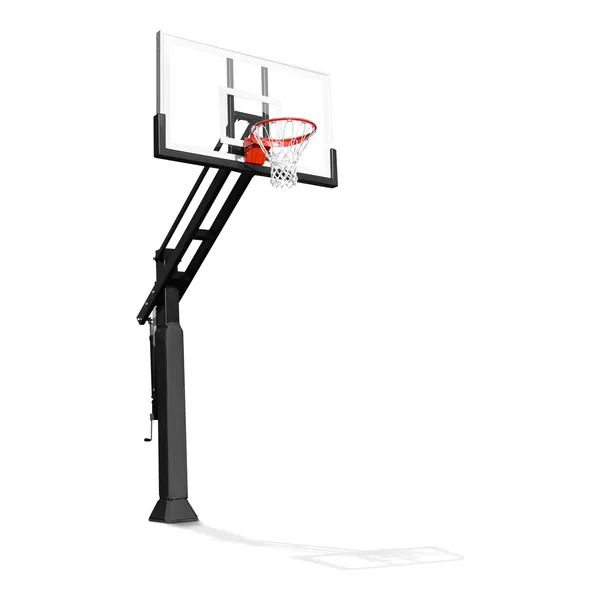
Why the spread? A bigger board on a longer arm puts more leverage on the footing. The THOR Platinum hangs a 72 by 42 inch glass board 4 ft from an 8 by 6 inch pole; that is a lot of lever to hold still.
Which bag to buy
Goalrilla's advice is refreshingly practical: unless you already have a favourite, a standard "high-strength" mix from the home store does the job. The mixes sold as fast-setting, crack-resistant or high-strength differ mostly in additives, such as fibers for extra bond. Pro Dunk asks for 3,000 psi or more, which most high-strength bagged mixes meet; check the bag.
Buy one or two bags more than the manual says. Bags tear, the hole ends up a little wider than planned, and a second trip to the store with wet concrete in the tub is nobody's idea of fun.
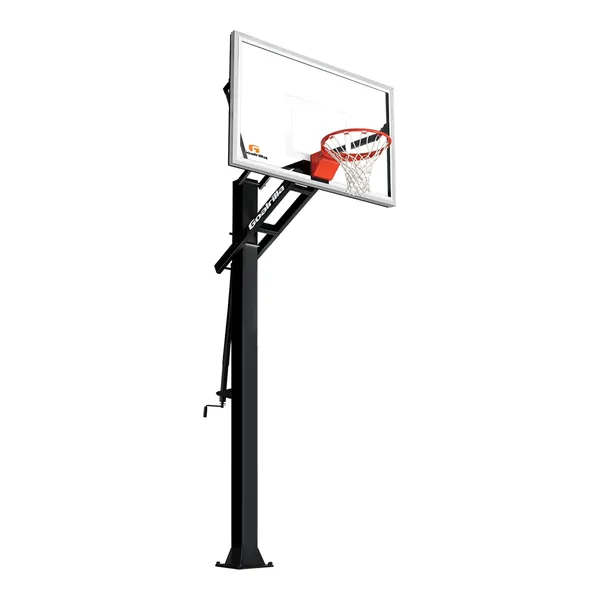
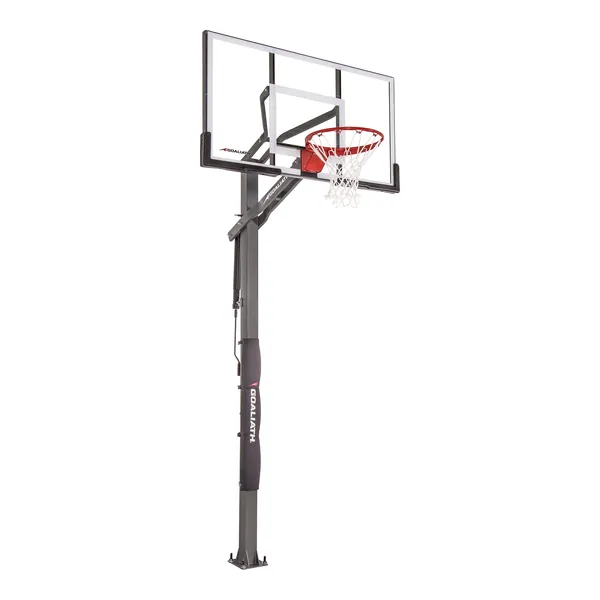
Goalrilla GS60C
A middle-size footing for a 60-inch glass board: Goalrilla recommends 12 to 13 bags for its in-ground installs, and the anchor lets you unbolt the hoop later.
8.8/10Very good · $2,049.95 at Goalrilla, checked Nov 12, 2026
How much water per bag
Goalrilla gives the numbers: about 6 pints (2.8 L) of water per 80 lb bag, or 4 pints (1.9 L) per 60 lb bag. If you have no measuring bucket, a 2 L soda bottle gets you close. Make a well in the dry mix, pour the water in the middle, and work it with a hoe until it looks like thick oatmeal and holds its shape in a gloved hand.
Mix one or two bags at a time and move each batch into the hole right away. On hot days you may need a little more water as it evaporates; on any day, keep the mix moving so it does not start to set in the tub.
Pouring around the anchor
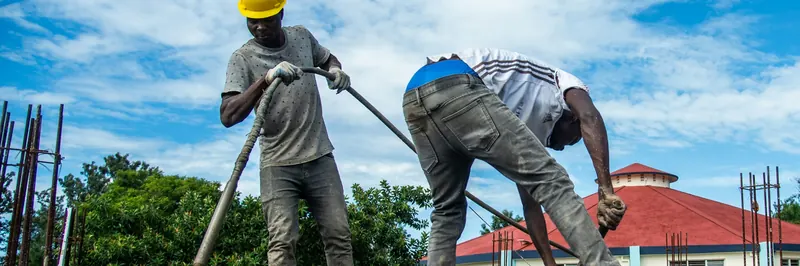
Pour in layers and work each one with a shovel or a piece of rebar to push out air pockets. Voids you cannot see are what weaken a footing. Set the anchor template so the bolts are plumb, with the thread length your manual asks for above the surface (Pro Dunk leaves about four inches), then check level in two directions and leave it alone.
Shape the top so water runs away from the bolts. Then leave it curing for the time your manual gives before you mount anything.
Cold weather and frozen ground
Goalrilla's rule: if it stays below 40°F for a long stretch, reconsider your install date, and never place concrete in frozen ground, which can crack, crust and settle unevenly. If you must pour in winter, use hot water and concrete curing blankets (Goalrilla mentions about $50 to $60 at home stores) to keep heat and moisture in. Or let an installer handle it: they usually have the blankets already.
Why the footing matters more than the board
Every in-ground hoop is a lever. The backboard and rim hang 2 to 4 ft in front of the pole (Goalrilla's overhang guide), and every shot, rebound and dunk pushes on that lever. The footing is what pushes back. That is why makers scale the hole with the board: 16 inches square for Pro Dunk's 54- and 60-inch APOLLO, 24 inches square and 4 ft deep for its 72-inch THOR Platinum.
A footing that is too small rarely fails on day one. It shows up two winters later as a pole that leans a degree or two and a rim that is no longer level.
Shopping list for pour day
- Concrete mix: your manual's figure plus one or two bags (12 to 13 for a Goalrilla, 15 to 25 bags of 80 lb mix for a Pro Dunk THOR).
- Clean water and a way to measure it: about 6 pints per 80 lb bag, 4 pints per 60 lb bag (Goalrilla).
- A mixing tub or wheelbarrow, a hoe and a shovel; a mixer if you rent one.
- A 4 ft level and a tape measure for the anchor.
- Gloves and eye protection: wet concrete is caustic.
- In cold weather: hot water and curing blankets; in hot weather, a hose to keep the surface damp.
Then read our installation guide for the order of the day.
Do the math yourself (it takes two minutes)
If your maker does not print a bag count, you can work it out. Multiply the hole's width, length and depth in feet to get cubic feet, then divide by the yield printed on your bag. A standard 80 lb bag of concrete mix says it makes about 0.6 cubic feet.
- 20 x 20 x 36 inch hole (Pro Dunk THOR Gold spec): 1.67 x 1.67 x 3 = about 8.3 cu ft, so about 14 bags of 80 lb. Pro Dunk says 15 to 20, which leaves room for a hole that comes out wider than planned.
- 24 x 24 x 48 inch hole (THOR Platinum spec): 2 x 2 x 4 = 16 cu ft, so about 27 bags on paper. Pro Dunk says 20 to 25; the anchor and a slightly tapered hole eat some volume, but our advice is to buy to the high side.
One practical tip: if the count passes about 30 bags, price a small ready-mix delivery: it can cost about the same and saves your back.
Whatever the math says, the maker's manual wins. Hole size and depth are part of the warranty conditions on most hoops.
Can you bolt to an existing slab?
Sometimes. Pro Dunk says you can use epoxy wedge anchors in existing concrete if it is at least 6 inches thick and steel reinforced; drill a pilot hole to check the thickness, and use bolts long enough to sit 5 inches down with 4 inches of thread above. If the slab is too thin, the usual answer is to cut through it and pour a proper footing. Ask the maker before you try this with a 72-inch board.
Budgeting the whole project? Our installation cost guide adds up the hoop, the concrete, pads and labor.
Our three picks for this guide
Scores come from our published formula; the full list is in the ranking.